How Nashville Went From a HeeHaw Market to a Top 10 Luxury Market and Now the Ritz Is Opening in 2029
And #1 on the luxury list is Tahoe City, California. The irony — Hugh and Robinette married in Tahoe City in 2000.
But let's start at the beginning.
Robinette was born at Baptist Hospital in 1975. Hugh was born on a reservation in Oklahoma on Christmas Day, 1974, where his dad was a medical resident. His parents moved back home to Nashville when Hugh was six months old.
Robinette and Hugh met in 9th grade at the Harpeth Hall Christmas dance and have been together ever since.
Let's just agree: they're both Nashville unicorns.
Fast forward.
Nashville started getting "hot" after the 1998 tornado tore through downtown and East Nashville. The tornado devastated the city — but it also sparked a rebirth. East Nashville rebuilt. New restaurants like Margot opened. The Tomato Art Fest got its start. Hot chicken grew beyond Prince's and Bolton's. And West Nashville finally got curious about the other side of the Cumberland River.
Post Georgia Tech, Robinette and Hugh were living in Atlanta in 2001, but they started to think about raising a family — and they missed home.
Downtown Nashville was beginning to thrive. Broadway shifted from shady adult shops to Ernest Tubb Records being appreciated again. Robert's and Tootsie's re-emerged as real honky-tonks. The Gastons moved back home in 2002 and rented at the Bennie Dillon on Church Street, craving a more cosmopolitan lifestyle. By 2003, they'd bought their first home on Richland Avenue — skipping the suburbs, wanting to stay close to the city.
Over the next 24 years, East Nashville blossomed and the hipsters embraced it. Some of the city's best dining started popping up along the Gallatin Road corridor. Acme Feed & Seed was a legit agricultural store for 50 years — Robinette used to buy rabbit food there for Daisy, her pet bunny. By 2014, Acme had transformed into a multi-story honky-tonk serving great food and live music. The rest of lower Broadway followed its lead. Alan Jackson was one of the first to brand his own bar, and others came fast behind him — Margaritaville, Ole Red, Nudie's Honky Tonk.
But it was Nashville, the TV show that premiered in 2012, that changed everything. Almost overnight, this quaint little city was glamorized on a national level. The country went from assuming we didn't wear shoes in the South to assuming every Nashvillian lives in cowboy boots and a hat.
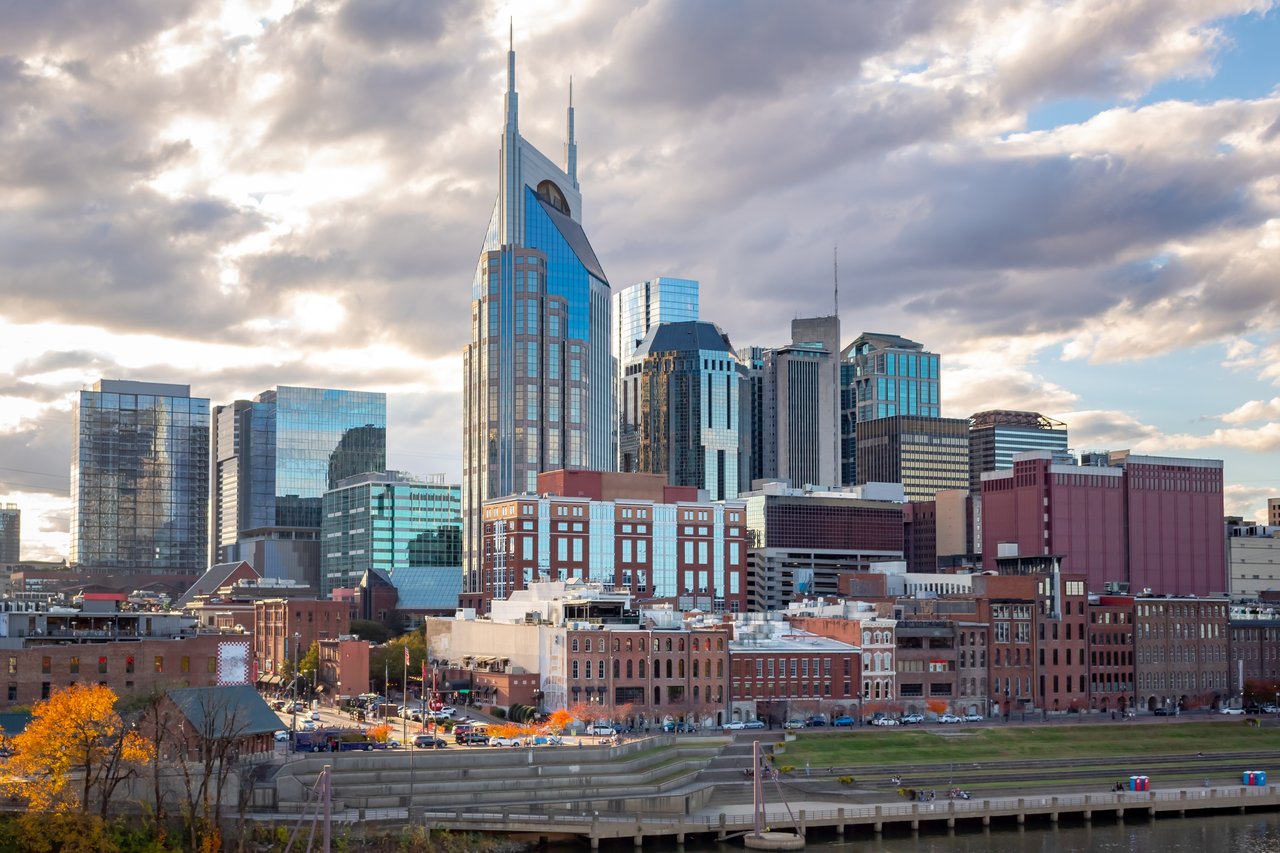
Tony Giarratana deserves real credit here too. He was one of the first developers to bet on downtown living — starting with Premier Parking, then The Cumberland, the Bennie Dillon, where the Gastons lived for a year, and The Encore. But it was The 505 — 45 stories of curved glass on Church Street, completed in 2018 — that really accelerated things. He’s now developing the tallest building in Tennessee, The Paramount, which will surpass The Batman building when it opens in 2028.
In the 2010s, bachelorette parties shifted from Vegas to Nashville. The pedal taverns arrived. National conventions started booking the Music City Center. For years, the fanciest places to stay were the Hermitage Hotel, still glamorous, and the Opryland Hotel. Then came the Omni, the JW Marriott, the Westin, the Grand Hyatt. Now we've got a Four Seasons, 1 Hotel Nashville, the Conrad, and soon The Ritz-Carlton.
But it was these forces converging that truly got us to where we are today:
No state income tax + relative affordability. Compared to coastal cities, Nashville offers high earners a way to keep more of their money while still getting urban amenities — an average of 90 new residents have been arriving daily, drawing heavily from California, Texas, and the Northeast.
Corporate relocations brought high earners. Expansion from companies like Oracle, Amazon, and AllianceBernstein planted serious white-collar money in the metro, on top of the city's existing healthcare-IT and music-industry employment base.
2020–2022 was the inflection point. Active listings dropped below 1,600 homes across the seven-county MSA at the frenzy's peak, with homes selling in 11 days and almost no price cuts. Median prices jumped more than 62% across Tennessee from 2020 to 2025 — that's the run that put Nashville on the map nationally as a luxury destination, not just a regional one.
Population growth outpaced supply. The metro area added roughly 35,000 residents in 2024 alone — exactly the kind of sustained in-migration that turns a "nice place to live" into a market with real price pressure.
Where It Stands Now
The market has cooled from the 2021–2022 frenzy, but luxury is holding differently than the broader market:
- The prime tier above $1M continues to clear at its own pace, with cash-buyer share regularly above 30%.
- Luxury holds firm when homes are show-ready and priced for today's buyer — staging and pricing discipline matter more than they did three years ago.
- Luxury areas like Green Hills have pulled back somewhat from their 2022 peak, even as East Nashville keeps appreciating at a faster citywide pace.
- The overall market has gone from "chasing offers" to calm, not cold — more inventory, longer days on market, and seller concessions more important than ever.
It's a good narrative arc, honestly: quiet Southern city → pandemic-fueled boom town → maturing into a stable, sustained luxury market with real institutional staying power.
Which brings us to this….
The Nashville Business Journal recently shared the Top 10 luxury markets:
- Tahoe City, CA
- Marco Island, FL
- Ocean City, NJ
- Incline Village, NV
- Pebble Beach, CA
- Nashville, TN
- San Francisco, CA
- Newport Coast, CA
- Fort Lauderdale, FL
- Saint Petersburg, FL
Nashville is rubbing elbows with San Francisco and Pebble Beach? Yep, we've come a long way in an astonishing short period of time!
The Gaston Group has had a front-row seat to all of it. We know our city — its neighborhoods, its schools, the best place for a martini, J. Alexander's; ask for the sidecar. We also know how to price a home to net the owner the most money. We have the patience to listen to what buyers actually need and get them into their dream home.
The real superpower of a real estate agent is negotiation — and we've been doing that as business professionals for over 25 years. It's not about a for-sale sign or opening a door. It's about building a relationship so strong that a client referral becomes the greatest compliment we'll ever receive.
*The Business Journals analyzed ZIP code-level mortgage and real estate data provided by Intercontinental Exchange to determine the hottest luxury housing markets. The analysis was limited to ZIP codes that had an average sales price of $1.5 million or greater and a minimum of 10 listings sold during the most recent quarter. The rankings aren’t meant to highlight the most expensive or the most popular markets, although some of those are on the list. Instead, rankings spotlight ZIP codes where activity is surging.